API Penetration Testing: What's Covered and How to Prepare
By Alankar Pande ·
In this guide
An API penetration test checks whether your API enforces who can do what, to which data, and how often. The usual focus is authentication, object- and function-level authorization, data exposure, resource limits and inventory, which are the themes of the OWASP API Security Top 10 (2023). What a particular test actually covers depends on the endpoints, versions and roles you put in scope, so the scope document matters as much as the testing.
Why APIs need their own test
A web interface can hide a field the user shouldn't see while the API behind it still sends it. Mobile apps, single-page apps and partner integrations all talk to the API directly, so the API is where your security rules are really enforced or not. OWASP also points out that APIs tend to expose more endpoints than traditional web applications, which makes accurate documentation and inventory important.
A test of your marketing site or login page doesn't tell you much about an authenticated API. If a customer asks whether your API was tested, the honest answer depends on which endpoints, versions and roles were in scope.
What an API pentest typically examines
Authentication
Testers look at how tokens and API keys are issued, validated, refreshed and revoked: missing expiry, tokens that survive a password change, and flaws in login or reset flows. OWASP covers this as API2:2023, Broken Authentication.
Object-level authorization
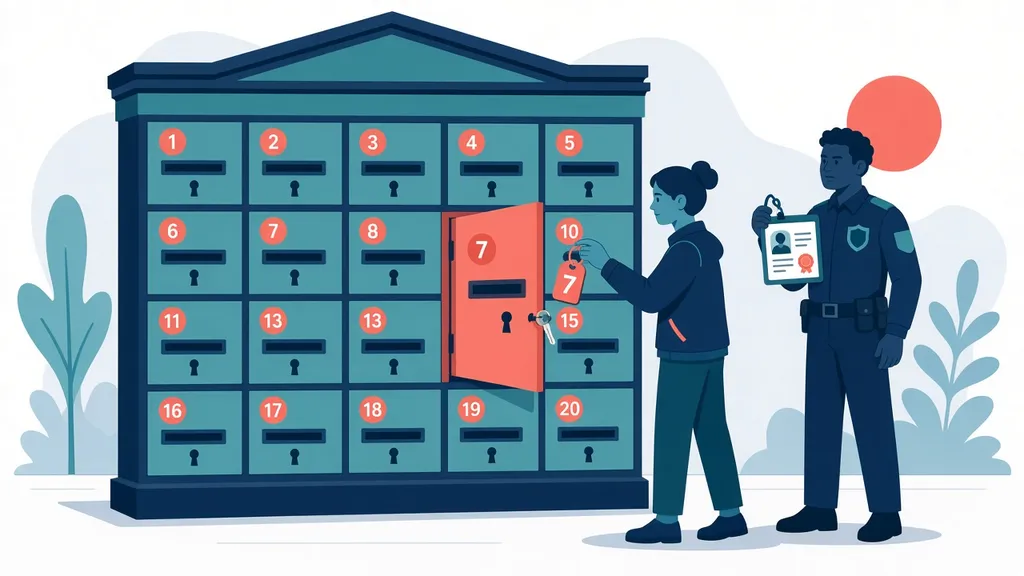
Can user A read or change user B's records by changing an ID? OWASP ranks this first, as API1:2023, and recommends object-level authorization checks in every function that accesses a data source using an ID from the user. In a multi-tenant product this is the bug that exposes one customer's data to another. Testing it properly needs at least two accounts, ideally in two separate organizations.
Property- and function-level authorization
Can a user update a field they shouldn't, such as role or plan, or receive fields that should be hidden? Can a regular user call an admin endpoint simply by knowing its path? These map to API3:2023 and API5:2023. Authorization testing, BOLA and IDOR goes into these checks in more depth.
Resource consumption and business flows
Missing rate limits, unbounded page sizes or expensive operations can cause outages or surprise bills, especially when an endpoint triggers paid services such as SMS (API4:2023). A separate problem is a flow that works exactly as coded but can still be abused at scale, such as account creation or coupon redemption; OWASP notes that API6:2023 doesn't necessarily come from implementation bugs.
Server-side requests and integrations
If your API fetches URLs that users supply, for example to import a file or preview a link, testers check for server-side request forgery (API7:2023). They may also look at how much your code trusts data coming back from third-party APIs (API10:2023).
Configuration and inventory
This covers verbose errors, permissive CORS, weak TLS settings, forgotten staging hosts, old API versions that still answer, and debug endpoints left switched on (API8 and API9:2023).
How to prepare your API for testing

- Export an inventory. OpenAPI files, GraphQL schemas or Postman collections save testers hours of discovery and improve coverage. Include every version that still responds in production, not just the current one.
- List roles and tenants. Provide an account for each role, in at least two separate organizations if you're multi-tenant.
- Seed synthetic data. Testers need records to read, edit and delete. Never use real customer data.
- Agree limits. State acceptable request rates and flag any endpoint that sends real emails or SMS, or charges a card, so testing doesn't create real-world costs.
- Name a contact. Pick someone who can rotate a key or answer a question within the hour.
How to scope a pentest has a fuller checklist, and what a pentest tests shows how an API test fits alongside the other kinds.
| Preparation item | Why it matters |
|---|---|
| API specification | Improves endpoint coverage |
| Two tenants, multiple roles | Makes authorization testing possible |
| Synthetic data | Safe read/write testing |
| Rate and side-effect limits | Prevents outages and real charges |
| Technical contact | Unblocks testing quickly |
REST, GraphQL and webhooks
The risk themes are the same across API styles, but the techniques differ. GraphQL brings questions about query depth, batching and how much of the schema is exposed to anyone who asks. Webhooks raise questions about signature checking and whether an old, captured request can be replayed. Tell the tester which styles you use so they plan for them.
Automated API checks and their ceiling
Automated testing, including pentest99.com's, can work through in-scope API endpoints looking for common weakness patterns, which makes it useful for regression checks between releases. What it can't do well is judge whether a given role should be allowed to reach a given record, or whether a business flow can be abused. That remains manual work. Automated vs manual pentesting explains how teams combine the two; confirm pentest99.com's current scope before relying on it.
API testing questions
Do I need an API spec for a pentest?
Not strictly. Without one, testers have to discover endpoints from traffic and guesswork, and undocumented or older endpoints are the ones most likely to be missed.
Is the OWASP API Top 10 a compliance standard?
No. It is an awareness document describing common risk categories. It's useful for planning a test and discussing results, but passing a test against it isn't a certification.
Can you test an API in production?
Yes, with agreed safeguards on request rates, destructive actions and side effects such as emails or payments. Many teams prefer a staging environment that closely mirrors production, and note any differences in the scope.
How is an API pentest different from a web app pentest?
They overlap a lot. A web application penetration test focuses on the browser experience and the backend calls it makes; an API test goes straight at the endpoints, including ones no screen uses. Most SaaS products benefit from scoping both together.
Sources: OWASP API Security Top 10 (2023); OWASP WSTG; NCSC penetration testing guidance. Sources checked: November 2026.
References
- https://owasp.org/API-Security/editions/2023/en/0x11-t10/
- https://owasp.org/www-project-web-security-testing-guide/
- https://www.ncsc.gov.uk/guidance/penetration-testing
Educational guidance, not a guarantee of security or compliance. PenTest99 uses automated tooling and AI-agent verification; it is not a human-led manual assessment. Scope and limitations matter.